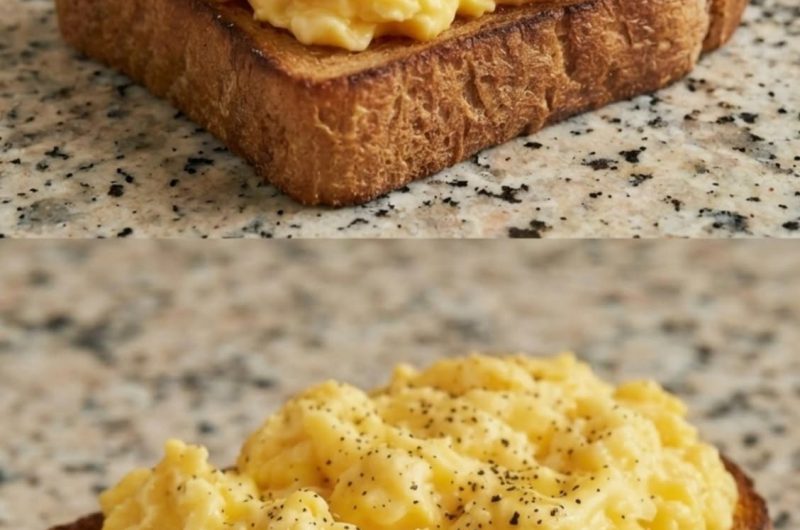
Scrambled eggs are one of those breakfasts that are simple enough for a busy morning but still feel satisfying when they are cooked just right. The difference between ordinary scrambled eggs and soft, fluffy scrambled eggs mostly comes down to a few small details: how you whisk the eggs, how much heat you use, and how quickly you take them out of the pan.
This recipe makes one serving using two large eggs, a small amount of milk or heavy cream, and butter for the pan. The result is soft, tender eggs that are perfect with a slice of buttered toast.
The most important thing is not to rush the cooking process. Scrambled eggs cook quickly, especially over low heat, so it helps to keep your spatula nearby and watch the texture as the eggs set.
What Makes Scrambled Eggs Fluffy?
Fluffy scrambled eggs should be soft and light rather than dry, rubbery, or heavily browned. A little milk or heavy cream helps give the eggs a smooth texture, while gentle cooking keeps them tender.
The eggs also need to be whisked well before they go into the pan. Whisking combines the whites and yolks so that the mixture cooks evenly. There is no need to whisk aggressively for a long time; simply continue until the eggs and milk are fully combined.
Low heat is another important part of the process. Eggs can go from creamy to overcooked surprisingly quickly. Starting with a warm pan and then lowering the heat gives you better control while the eggs cook.
Getting the Eggs Ready
Start by cracking two large eggs into a small bowl. Add 1 tablespoon of milk or heavy cream.
Whisk everything together until the mixture looks evenly combined. You should not see separate streaks of egg white or yolk. Once the eggs are mixed, set the bowl aside while you prepare the pan.
Because this recipe cooks so quickly, it is useful to have everything ready before turning on the heat. Have your rubber spatula nearby, and keep the plate you plan to use ready as well.
Choosing the Right Pan
A good non-stick pan works particularly well for scrambled eggs because the eggs can be moved around easily without sticking to the surface. A well-seasoned cast-iron skillet can also be used.
The key is having a pan that allows the eggs to move freely when you gently scrape and fold them with a rubber spatula.
For this recipe, heat the cast-iron skillet over medium-low heat. Let it warm up before adding the butter.
You do not want the pan extremely hot. Scrambled eggs need gentle heat, and a very hot pan can make the eggs cook too quickly on the outside before you have a chance to achieve that soft, fluffy texture.
Adding the Butter
Once the skillet is warm, add about 1/4 tablespoon of butter.
Let the butter melt across the surface of the pan. When it begins to sizzle or visibly bubble, reduce the heat to low.
This is the point where the pan is ready for the eggs. The butter should be melted and lightly sizzling, but it should not be burning or turning dark.
Keeping the heat low from this point gives you more time to control how the eggs set.
Let the Eggs Sit Briefly
Pour the whisked egg mixture into the skillet.
Once the eggs are in the pan, resist the urge to start stirring immediately. Let the mixture sit for about 15 seconds.
During this short pause, the bottom of the eggs begins to set. This gives you something to gently break up with the spatula instead of immediately moving completely liquid eggs around the pan.
After about 15 seconds, you can start scrambling.
Gently Scramble the Eggs
Using a rubber spatula, gently break up the egg mixture.
Move the spatula through the eggs to bring the cooked portions together and allow the uncooked egg to reach the warm surface of the skillet. Continue doing this slowly rather than constantly stirring the eggs as fast as possible.
The goal is to create soft curds while allowing the remaining liquid egg to cook.
Keep the eggs moving gently around the pan. As more of the mixture sets, the curds will become larger and softer. Continue slowly scrambling until the eggs are no longer runny.
There is no need to cook the eggs until they are completely firm and dry. They should still look soft when you take them out of the pan.
Know When to Take Them Off the Heat
This is one of the most important parts of making good scrambled eggs.
As soon as the eggs are no longer runny, transfer them to a plate. Do not leave them sitting in the hot skillet while you prepare your toast or look for your seasoning.
The pan remains hot after the heat is turned off, so the eggs can continue cooking from the residual heat. Taking them out immediately helps keep them soft and tender.
If you wait until the eggs look completely dry in the pan, there is a good chance they will be firmer than you want by the time they reach your plate.
Season and Serve
Once the eggs are on the plate, sprinkle them with salt and pepper.
That is all they need for a simple breakfast. The eggs are especially good served with buttered toast, which adds a crisp and buttery contrast to the soft scrambled eggs.
Because the recipe makes one serving, it works well when you want a quick breakfast without preparing a large batch.
Simple Tips for Better Scrambled Eggs
Keep the Heat Low
Low heat gives you more control over the eggs. They cook gently instead of becoming firm too quickly.
Whisk Before Cooking
Make sure the eggs and milk or cream are fully combined before they reach the skillet. This helps create an even texture throughout the eggs.
Use a Rubber Spatula
A rubber spatula makes it easier to gently break up and move the eggs without scraping aggressively against the pan.
Do Not Overcook
Remove the eggs as soon as they are no longer runny. They do not need to become dry or firm in the skillet.
Have Your Plate Ready
Scrambled eggs cook quickly. Having the serving plate ready means you can transfer them from the pan immediately when they are done.
Making More Than One Serving
This recipe makes one serving with two large eggs. If you are cooking for more people, simply multiply the recipe according to the number of servings you need.
For example, two servings would require four large eggs, and three servings would require six large eggs. The same basic cooking method applies: whisk the eggs with the milk or cream, cook gently in butter, scramble slowly, and remove them from the pan as soon as they are no longer runny.
When making a larger amount, make sure your skillet is large enough to give the eggs room to cook evenly.
A Simple Breakfast That Comes Together Quickly
From start to finish, these scrambled eggs take about 10 minutes, including preparation. There are only a few ingredients, and the cooking method is straightforward.
The main trick is paying attention to the heat and the texture rather than relying only on a timer. Once the eggs begin to set, stay close to the pan and gently move them with the spatula. When the last of the visible liquid egg has cooked, move them straight to the plate.
Serve the fluffy scrambled eggs with salt and pepper and, if desired, buttered toast. The finished eggs should be soft, tender, and light enough to make a simple breakfast feel a little more special.
Fluffy Scrambled Eggs
Description:
Soft, fluffy scrambled eggs made with two large eggs, a splash of milk or heavy cream, and butter. A quick, simple breakfast served with salt, pepper, and optional buttered toast.
Prep Time: 5 minutes
Cook Time: 5 minutes
Total Time: 10 minutes
Servings: 1
Ingredients
- 2 large eggs
- 1 Tbsp milk or heavy cream
- Butter for the pan
Instructions
- Crack the eggs into a small bowl and add the milk or heavy cream. Whisk until fully combined.
- Heat a cast-iron skillet over medium-low heat.
- Add about 1/4 tablespoon of butter and let it melt.
- When the butter starts to sizzle or bubble, reduce the heat to low.
- Pour the egg mixture into the skillet and let it sit undisturbed for 15 seconds.
- Using a rubber spatula, gently break up and scramble the eggs so the uncooked mixture can cook.
- Continue slowly scrambling until the eggs are no longer runny.
- Immediately transfer the eggs to a plate.
- Season with salt and pepper. Serve with buttered toast if desired.
Notes
- A seasoned cast-iron skillet or good non-stick pan works well.
- Keep the heat low once the eggs are added to prevent overcooking.
- Remove the eggs from the skillet as soon as they are no longer runny, since they can continue cooking from the residual heat.
- For more servings, multiply the ingredients accordingly.
- Calories: approximately 150 kcal per serving, based on two large eggs and 1 tablespoon of 1% milk.