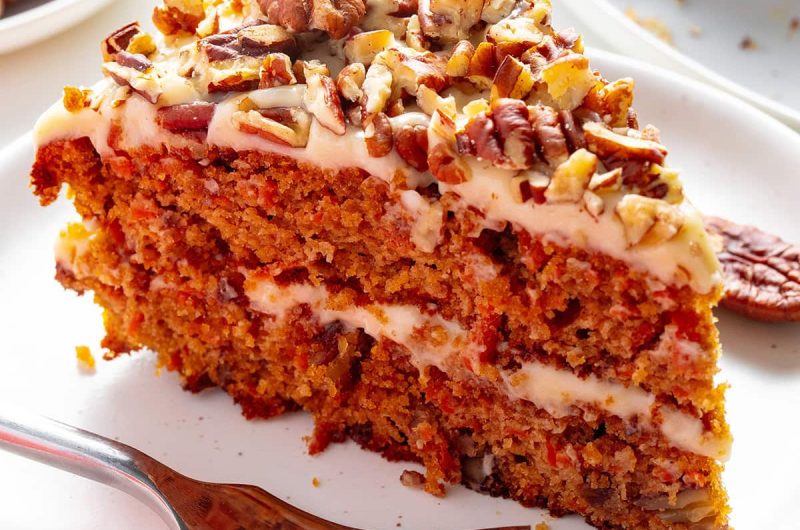
This homemade keto carrot cake is soft, moist, lightly spiced, and filled with crunchy pecans. It is made with almond flour instead of regular wheat flour and uses a monk fruit allulose blend in place of traditional sugar. Freshly grated carrots add moisture and natural sweetness, while cinnamon gives the cake its familiar warm carrot-cake flavor.
The finished cake has two tender layers with sugar-free cream cheese frosting between them and over the top. A scattering of chopped pecans adds a pleasant crunch and makes the cake look finished without requiring complicated decoration.
Although carrot cake is usually associated with a dense, sweet dessert, this version has a lighter texture. The combination of softened butter, eggs, almond flour, and freshly grated carrots keeps the layers moist while the baking powder helps them rise.
This recipe makes two 9-inch round cake layers. Once cooled, the layers are stacked with frosting in the middle and another layer of frosting on top. The sides can also be frosted if desired.
What Makes This Cake Different?
The main difference is the flour and sweetener. Blanched almond flour provides a fine texture and works particularly well for cakes. It gives the cake enough structure without making it heavy or grainy.
The sweetener used here is Besti Monk Fruit Allulose Blend. It provides sweetness while helping the cake stay moist. Plain allulose can also be used according to the appropriate conversion, but the ingredients listed for this recipe should otherwise remain unchanged.
Fresh carrots are important because they contain more moisture than pre-shredded carrots. Grating them just before preparing the batter helps prevent the cake from becoming dry.
A small amount of blackstrap molasses and pineapple extract is included as an optional flavor boost. They help create some of the deeper flavors commonly associated with traditional carrot cake. If you prefer, these optional ingredients can simply be left out.
Preparing the Cake Pans
Start by heating the oven to 350°F (177°C).
Prepare two 9-inch (23 cm) round cake pans. Place parchment paper on the bottoms and grease the bottoms and sides. Springform pans can also be used and make releasing the cooled cakes easier.
Preparing the pans before mixing the batter is useful because the batter should go into the oven soon after it is finished. Having the pans ready also makes it easier to divide the thick batter evenly.
Cream the Butter and Sweetener
Place the softened unsalted butter and Besti Monk Fruit Allulose Blend in a large mixing bowl.
Using a hand mixer, beat them together until the mixture becomes light and fluffy. Take a moment to scrape down the sides of the bowl so that no butter remains stuck around the edges.
Next, add the blackstrap molasses if using, followed by the vanilla extract and pineapple extract if using. Beat until everything is evenly incorporated.
The butter should be properly softened before mixing. Very cold butter will not cream smoothly, while melted butter will change the texture of the cake. Softened butter should be easy to press with a finger but should still hold its shape.
Add the Eggs
Add the four eggs one at a time.
Beat after each addition until the egg is incorporated before adding the next one. Scrape the sides of the bowl as needed.
The mixture may look slightly separated while the eggs are being added. This is not necessarily a problem. Continue mixing until the ingredients are combined.
If the mixture sits for a while before the dry ingredients are added, give it a brief mix again before continuing.
Mix the Dry Ingredients
In a separate bowl, combine the almond flour, baking powder, cinnamon, and sea salt.Whisk the ingredients together thoroughly. This helps distribute the baking powder, cinnamon, and salt throughout the almond flour and breaks up small lumps.Measuring the almond flour correctly is important. Scoop it into the measuring cup and level the top with a knife rather than pressing the flour down. Packing the flour can result in too much flour and a drier cake.
Combine the Batter
Add the dry mixture to the bowl containing the wet mixture.
Stir until the ingredients are combined. The batter will be thick, and that is normal for this recipe. It will not have the loose consistency of a traditional wheat-flour cake batter.
Avoid overmixing once everything is incorporated. Scrape around the bottom and sides of the bowl to make sure there are no pockets of dry almond flour remaining.
Fold in the Carrots and Pecans
Add the freshly grated carrots to the batter.
The carrots should be grated and then measured loosely. Do not firmly pack them into the measuring cup. If the carrots are unusually wet, gently squeeze out some excess moisture before adding them.
The carrots can be grated finely or more coarsely. A finer grate gives the cake a more uniform texture, while a coarser grate leaves more noticeable pieces throughout the cake.
Fold in 1 cup of the chopped pecans, reserving the remaining 1/2 cup for decorating the finished cake.
Fold gently until the carrots and pecans are distributed throughout the batter.
Divide and Bake
Divide the batter evenly between the two prepared cake pans.
Because the batter is thick, use a spoon or spatula to spread it evenly. Smooth the tops as much as possible before placing the pans in the oven.
Bake for 25 to 30 minutes.
If both pans are placed on separate oven racks, swap their positions halfway through baking so that the layers bake more evenly.
The cakes are ready when they are golden brown and the tops spring back lightly when touched. A toothpick inserted into the center should come out clean or with only a few moist crumbs.
Avoid relying on color alone. Almond flour cakes can brown on the outside before the center is completely baked, so checking the center with a toothpick is helpful.
Cool the Cake Layers Completely
Once the cakes are baked, leave them in their pans for about 10 minutes.
After this short cooling period, carefully transfer the layers to a wire rack. Allow them to cool completely to room temperature before frosting.
This step is important. Frosting a warm cake can cause the cream cheese frosting to soften or melt, making the layers difficult to stack.
Prepare the Cream Cheese Frosting
While the cake layers are baking or cooling, prepare the sugar-free cream cheese frosting.
Use two recipes of the sugar-free cream cheese frosting so there is enough for the center and top of the cake. If you want to cover the sides generously as well, additional frosting may be needed.
If the frosting has been refrigerated, allow it to come back to room temperature before spreading it over the cake. Cold cream cheese frosting can be quite firm and may pull at the soft surface of the cake.
Assemble the Two-Layer Cake
When both cake layers have completely cooled, place one layer on a plate or cake stand.
Spread a layer of cream cheese frosting evenly over the top.
Carefully place the second cake layer on top. Add more frosting to the top and spread it across the surface.
The sides can be left exposed for a simple layered appearance, or they can be covered with additional frosting.
Finish by sprinkling the reserved chopped pecans over the top.
There is no need for complicated decorating. The chopped pecans provide texture and give the cake a classic carrot-cake finish.
Tips for the Best Texture
Use Freshly Grated Carrots
Fresh carrots contain more moisture than many packaged pre-shredded carrots. Grate them shortly before preparing the batter for the best result.
Do not tightly pack the grated carrots into the measuring cup. Too many carrots can add excessive moisture and affect the structure of the cake.
Measure Almond Flour Carefully
Almond flour should be scooped into the measuring cup and leveled. Avoid pressing it down.
Too much flour can make the cake noticeably drier.
Keep the Batter Evenly Divided
Try to distribute the batter equally between the two pans. This helps both layers finish baking at approximately the same time and makes stacking easier.
Let the Layers Cool
Do not rush the cooling process. The cake layers need to reach room temperature before frosting.
A warm layer can soften the frosting and make the cake difficult to assemble.
Use Room-Temperature Frosting
If the frosting has been stored in the refrigerator, let it soften before spreading. This prevents the frosting from pulling or tearing the delicate cake.
Optional Flavor Changes
The blackstrap molasses and pineapple extract are optional ingredients. They provide additional flavor but are not essential to the basic cake.
The cinnamon gives the cake its main warm spice flavor. Nutmeg or ground ginger can also be added for a more heavily spiced flavor, although these are not part of the listed recipe ingredients.
Pecans are used both inside the cake and as a topping. Walnuts can work well with carrot cake, but for this recipe, the specified ingredient remains pecans.
Making the Cake Ahead
This cake can be prepared ahead of time and kept covered in the refrigerator.
For the best texture and flavor, allow the finished cake to chill properly before serving, then let it sit briefly if desired so the frosting is not extremely firm.
Leftover cake can remain refrigerated for several days. Because the cake contains cream cheese frosting and fresh carrots, refrigeration is the appropriate storage method.
Freezing the Cake
The assembled cake can also be frozen.
First, place the uncovered cake in the freezer until the frosting becomes firm. Once the frosting has hardened, wrap the cake tightly to protect it from freezer air.
The cake can be frozen for up to 3 months.
When ready to serve, transfer it to the refrigerator and allow it to thaw overnight.
Serving the Cake
For the listed nutrition information, the cake is divided into 16 servings, with one serving being approximately 1/16 of the entire recipe.
The cake is rich and filling, so relatively small slices work well. Serve it chilled or allow it to sit briefly before serving for a softer frosting texture.
The combination of moist almond-flour cake, cinnamon, carrots, pecans, and cream cheese frosting makes it suitable for dessert, celebrations, or whenever a traditional-style carrot cake is wanted without using regular flour and sugar.
Description
A moist, fluffy two-layer keto carrot cake made with almond flour, freshly grated carrots, cinnamon, pecans, and a sugar-free cream cheese frosting. The cake is low carb and sugar free while keeping the soft texture and classic flavors of carrot cake.
Duration
- Prep Time: About 20 minutes
- Bake Time: 25–30 minutes
- Cooling Time: About 10 minutes in the pans, then until completely cool
- Total Time: About 1 hour, plus frosting preparation
- Yield: 16 servings
Ingredients
For the Cake
- 3/4 cup unsalted butter, softened
- 3/4 cup Besti Monk Fruit Allulose Blend
- 1 tbsp blackstrap molasses, optional
- 1 tsp vanilla extract
- 1/2 tsp pineapple extract, optional
- 4 large eggs, at room temperature
- 2 1/2 cups Wholesome Yum Blanched Almond Flour
- 2 tsp baking powder
- 2 tsp cinnamon
- 1/2 tsp sea salt
- 2 1/2 cups carrots, grated and loosely packed after grating
- 1 1/2 cups pecans, chopped and divided into 1 cup and 1/2 cup
For the Frosting
- 2 recipes sugar-free cream cheese frosting
Instructions
- Prepare the oven and pans.
Preheat the oven to 350°F (177°C). Line the bottoms of two 9-inch (23 cm) round cake pans with parchment paper. Grease the bottoms and sides. - Cream the butter and sweetener.
Beat the softened butter and Besti Monk Fruit Allulose Blend in a large bowl until light and fluffy. - Add the flavorings and eggs.
Beat in the blackstrap molasses, if using, vanilla extract, and pineapple extract, if using. Add the eggs one at a time, mixing after each addition. - Combine the dry ingredients.
In a separate bowl, whisk together the almond flour, baking powder, cinnamon, and sea salt. - Make the batter.
Stir the dry ingredients into the wet mixture until combined. The batter will be thick. - Add carrots and pecans.
Fold in the grated carrots and 1 cup of the chopped pecans. Reserve the remaining 1/2 cup of pecans for topping. - Fill the pans.
Divide the batter evenly between the two prepared pans and smooth the tops. - Bake.
Bake for 25–30 minutes, swapping the pan positions halfway through. The cakes are done when golden brown, the tops spring back lightly, and a toothpick inserted into the center comes out clean. - Cool.
Let the cakes cool in their pans for 10 minutes, then transfer them to a wire rack. Cool completely. - Prepare the frosting.
Prepare 2 recipes of sugar-free cream cheese frosting. - Assemble.
Place one cooled cake layer on a plate or cake stand. Spread frosting over the top. Place the second layer on top and frost the surface. Frost the sides as desired. - Finish.
Sprinkle the reserved chopped pecans over the top.
Notes
- Grate the carrots fresh and measure them loosely packed.
- If the carrots are very wet, gently squeeze out some excess moisture before adding them.
- Do not pack the almond flour into the measuring cup.
- The batter will be thick; this is normal.
- Let the cake layers cool completely before frosting.
- Bring refrigerated frosting to room temperature before spreading so it does not tear the cake.
- Double the frosting recipe for the filling and top. For generous side frosting, more frosting may be needed.
- Store the finished cake covered in the refrigerator.
- To freeze, freeze the assembled cake uncovered until the frosting is firm, then wrap tightly and freeze for up to 3 months. Thaw overnight in the refrigerator.
- Serving size: 1 slice, or 1/16 of the entire cake.
- Nutrition per serving: 359 calories, 34 g fat, 7.5 g protein, 8.5 g total carbs, 5.5 g net carbs, 3 g fiber, and 2 g sugar.